WORDLE
Solve Wordle Faster: A Repeatable Elimination Strategy
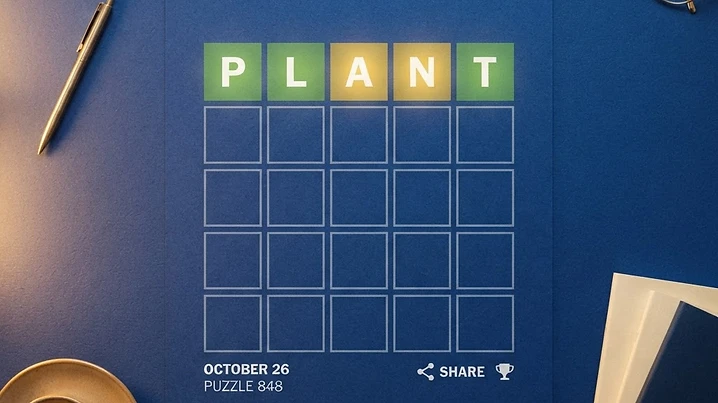
Wordle looks simple — guess a five-letter word in six tries — but the gap between a player who finishes in three and one who regularly burns all six comes down to process, not vocabulary. Is there luck in wordle or is there a system? Let's together find some help for you. This guide lays out a repeatable elimination strategy built around the game's three feedback colors: green, yellow, and grey.
The Three Feedback Signals
Every guess returns one of three states for each letter:
Green — the letter is in the word and in the correct position. This is your strongest signal; lock that slot and never move it. This gives you a real hint in solving the word.
Yellow — the letter is in the word but in the wrong position. You now know the letter belongs somewhere, and just as importantly, you know it does not belong in the slot it just occupied. You are close with the letter, but you need to try again about the letter's location.
Grey — the letter is not in the word at all. Cross it off your alphabet; do not try this letter again for this word.
Step 1: Open With a High-Vowel Anchor
Your first guess does the most work. Pick a word that covers three or more common vowels (A, E, I, O, U) plus a high-frequency consonant like S, T, R, or N. Classic openers — words like SLATE, CRANE, or AUDIO — are popular precisely because they maximize information gain on turn one. The goal of the opener isn't to be right; it's to get information to eliminate as much of the letters of the alphabet as possible.
Step 2: Maximize New Information on Guess Two
Resist the temptation to build only around your green and yellow letters on the second guess. If your opener went mostly grey, now you know what is NOT in the word. Your second guess should still introduce new common letters, you haven't tested yet. The ideal second guess tests a fresh batch of vowels and consonants while respecting what green and yellow already told you.
Step 3: Map the Yellows
Yellow letters are where most players lose time. The mistake is treating a yellow as "this letter is somewhere" without ruling out the slot it just appeared in. Track each yellow letter and the position it cannot occupy. If R came back yellow in slot 2, then the answer contains an R — but not in slot 2. Combined with greens you've locked, the available slots for each yellow shrink fast. By guess three or four, you can often place every yellow simply by process of elimination.
Step 4: Use Grey to Cross-Check
Grey letters are negative space, but they're powerful. Once a letter is grey, no valid answer contains it — so any candidate word you're considering that includes a grey letter is instantly dead. Keep a running mental (or scratchpad) list of eliminated letters and filter every candidate against it before you commit to a guess.
Step 5: Guess Efficiently, Not Hopefully
By guess four you usually have two or three realistic candidates. The worst move is to guess one and hope. The better move is to pick the candidate that — even if wrong — will clarify the remaining options. If you're torn between LIGHT and NIGHT, a guess like PINGO (or any word testing the L vs N distinction) can settle it in one turn instead of two. When only two candidates remain and you have plenty of guesses left, spend a guess on a word that splits them rather than gambling.
A Worked Mini-Example
Imagine your opener CRANE returns: C grey, R yellow (slot 2), A grey, N grey, E green (slot 5). You now know:
The word ends in E. It contains R, but not in slot 2. C, A, and N are out.
A strong second guess tests new letters while respecting that — something like STORE (new letters S, T, O; keeps E in slot 5; places R in a fresh slot 4). Suppose STORE returns S grey, T green (slot 2), O grey, R grey, E green. Now you have _ T _ _ E with R eliminated everywhere it's been tried — meaning R must sit in slot 1 or 3. A guess like TRIBE tests R in slot 2... wait, T is locked in slot 2. A guess like PRIDE tests R in slot 2 as well — not allowed. Instead try GRIME: if R lands green in slot 2... again T occupies it. The cleaner probe is THREE (R in slot 3) or TRITE. Each probe is chosen to place the remaining yellow, not to blindly guess.
The point: every guess is a deliberate test of a specific unknown, not a wish.
Common Pitfalls
- Reusing grey letters. It's the single fastest way to waste a turn.
- Ignoring yellow position hints. A yellow tells you where a letter isn't, which is half the battle.
- Guessing to win instead of guessing to learn. Early turns should gather information; late turns should clarify candidates.
- Forgetting repeated letters. Words can contain a letter twice (e.g., LEVEL, ROBOT). If a letter goes green in one slot and grey in another, the answer may still contain it twice — don't cross it off entirely.
When to Use the Wordle Helper
When you've narrowed the field but can't hold all the constraints in your head, the Wordle Helper on WordSparksAnswers.com does the bookkeeping for you: feed it your greens, yellows, and greys, and it returns the candidate words that satisfy every constraint at once. Use it to verify your logic or to break a stall — not as a crutch on turn one, but as a precision tool once you've done the elimination work yourself.
Master the process — anchor, probe, map yellows, cross-check greys, clarify — and four-guess solves become the norm rather than the exception.